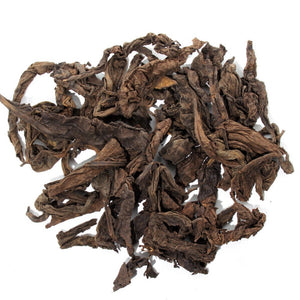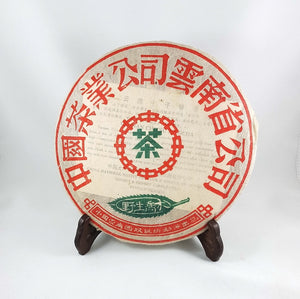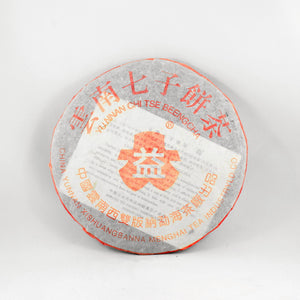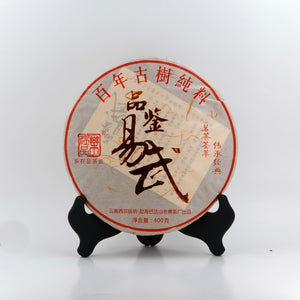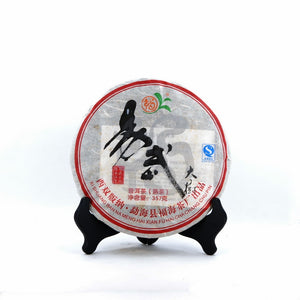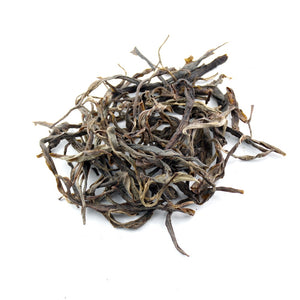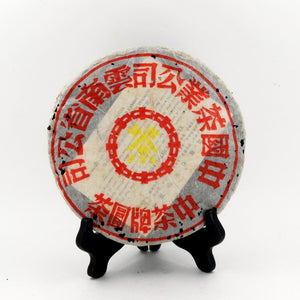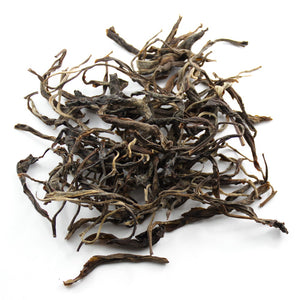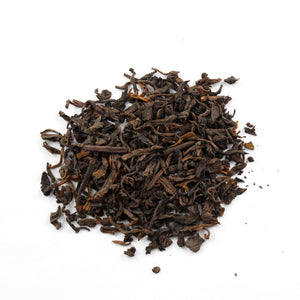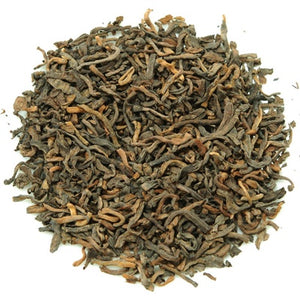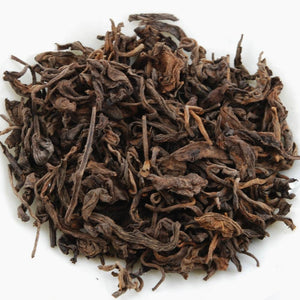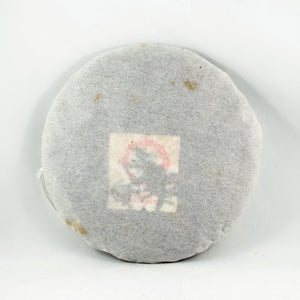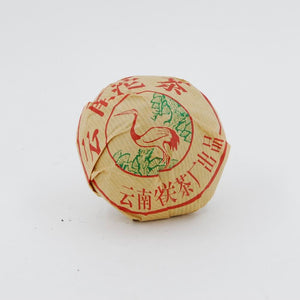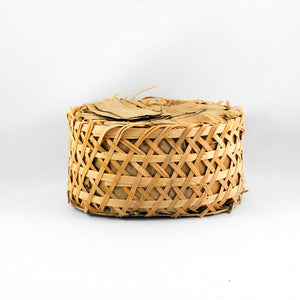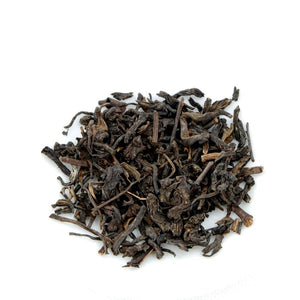
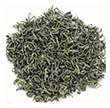
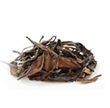
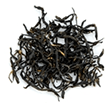
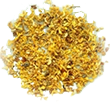


About Pu-Erh TeaFermentation: Post-fermentation from aging Growing Regions: Yunnan Best Seasons To Purchase: Spring, Summer, Autumn Pharmacological Elements: Vitamins B1, B2 C and E, potassium, phosphorous, calcium, magnesium, aluminum, lysine, arginine, histidine and cystine, linoleic and linolenic acids and trace amounts of zinc, sodium, nickel, iron, beryllium, sulfur and fluorides Types:
Popular Varieties:
Like the great wine regions of the world, Pu-Erh Tea production is highly regulated to ensure the highest quality and authenticity. Only aged tea that comes from Yunnan province can be called Pu-Erh tea. The leaves are grown and harvested in counties along the Lancang River. Each estate produces its own special type of leaves, ranging from the tips and strong stems grown on estate cultivated plants to the highly prized large and soft, silver leaves picked from plants and trees that grow wild on the hillsides. Some trees are said to be over 1,000 years old. The leaves picked from these old trees are referred to as "wild arbor". The leaves are harvested and sent to Pu-Erh City where each manufacturer blends the leaves to make their own unique and time-honoured recipes. Paradoxically, in Yunnan in the past, compressed and aged Pu-Erh was seen as an export commodity, with locals preferring the younger green varieties but is now enjoyed there like other areas. As we discuss in the section on Black Tea,
history has contributed to considerable
confusion in the naming of Chinese teas. In
the West, what are known as the Chinese Black
Teas are actually known as Red Teas in China.
The true Black Teas as they are known in China
are the post-fermented (aged) teas, of which
the Pu-Erh family of teas is the most famous.
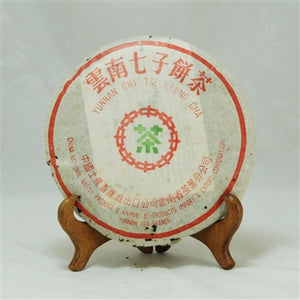
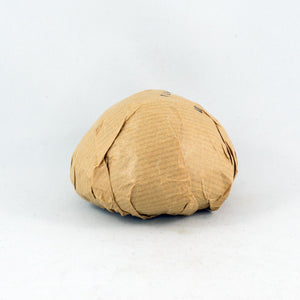
Production of Pu-Erh TeaTo add to the confusion in naming, Pu-Erh Tea comes in two varieties: Green (Sheng) and Black (Shou), depending on how the leaves are processed. Both Green and Black varieties follow the same steps of Withering - "Kill-Green" - Rolling/Forming - Drying and Steaming/Shaping. The Black variety has the additional step of "Cooking" (Piling/Heaping) which is heaping the leaves in a pile to facilitate fermentation. Both varieties are then stored for aging. Pu-Erh Teas differ from other teas and derive their unique flavor by the technique of sun-drying the leaves after the Rolling/Forming step. It is the heaping of the leaves into a pile that starts the natural enzymatic breakdown process of fermentation which creates heat and “cooks” the leaves. This adds a highly-prized complexity, depth and smoothness to the tea different from the green variety. Green Pu-Erh Tea has been around for centuries but the process for Black Pu-Erh Tea was first developed in 1973 and the first black Pu-Erh teas came on the market in 1975. After processing, for both green and black varieties, the leaves are then left as loose leaves or compressed into the following sahpes:
After forming, the tea is stored in warm and moist cellars which allows subtle chemical processes to further mature and mellow the tea over time. Pu-Erh tea is drinkable after 3 months and after 5 years, starts to develop its unique aged taste. A Quick History of Pu-ErhThe history of Pu-Erh Tea can be traced back to “Pu Tea” of the Eastern Han Dynasty (25-220 CE) with the drying of leaves in the sun in Yunnan province. The plants in this region have large, soft leaves spaced far apart on large, tough stems. Today, Pu-Erh Tea with “large wild leaves” is highly prized.
In 862 CE, Fan Cheuk, a Tang Dynasty (618 - 907 CE) scholar undertook a mission on behalf of the Emperor to Western China and Yunnan. He wrote in his book Meng Shu (“Book of Uncivilized Peoples”), “In the mountain areas around Yin-sheng, people use no sophisticated methods to pick tea. They cook leaves mixed with ginger, pepper, spices and milk and drink it”. Imagine the horror of the royal court accustomed to green tea hand-picked by maidens using golden scissors to select the most tender green tea buds and tips. In 1391, in the Ming Dynasty (1368 - 1644 CE), the first Ming Emperor ordered the abolition of all moon-shaped, compressed tea because people were wasting too much time in its manufacture. Only loose leaf tea would be permitted. The Ming Dynasty scholar Zhao Yuan wrote that Pu Cha was already very popular and everyone drank it regardless of class. Many Emperors drank Pu-Erh tea for longevity
and especially liked the In 1879, the British and French, forever in their quest for black tea, set up customs offices in Simao. Tea export increased and the ancient remains of the famous Pu-Erh Tea Horse Roads which radiated throughout Asia, carrying the horses and tea caravans are a national heritage. Flavours of Pu-Erh TeaTo learn about the flavours of Pu-Erh Tea, see flavour guide Storing Pu-Erh TeaBoth green and black varieties of Pu-Erh tea can be stored for long periods of time. In fact the longer the storage, the better the tea gets. We recommend storage in unglazed clay containers, either for long term holding or for drinking, since they “breathe” and reduce temperature fluctuations. The best clay containers are made from the same Yixing clay as the famous Yixing teapots. If these are not available, a sealed cardboard box can suffice or even a paper bag, but make sure these have no chemical odours from manufacturing. The best location for storage is a cool, dry place, away from temperature fluctuations and odours, such as those from the kitchen, as tea absorbs odours and this will affect the flavor of the tea. For tea that is to be stored long term, simply leave it in the original paper wrapping or packaging. For tea that is to be consumed, break the tea into small pieces using a strong dull knife. Since more of the surface of the tea is now exposed to air, oxidation will develop the complexity of tea more rapidly. This is called “waking up the tea”. If you do not intend to drink a tea before 5 years, it is best to leave it stored and unbroken. For a full discussion on storing Pu-erh tea, see our guide How To Store Pu-erh Tea by Daniel Lui. Buying Pu-Erh TeaFor a Westerner, purchasing Pu-Erh tea can be a daunting challenge as packaging and marketing methods in China are quite different than in the West and fakes and copies made inside and outside of China are common. Few Pu-Erh Teas have any Western language on the packaging, or show a date of manufacture or even a description of the ingredients.
Purchasing Pu-Erh tea is a process of finding a seller whose knowledge and experience you can trust and respect. As in China, this relationship is built over time and you may experience some false starts until you find a good match for your needs. For a more complete discussion on buying Chinese teas, read our guide How To Buy Chinese Tea by Daniel Lui. Pu-Erh Tea And Health Benefits
We believe that any food product can have positive and/or negative health effects and in varying degrees for different individuals. We do not recommend teas on the basis of health benefits and at this point, do not think it is prudent to recommend tea-drinking for anything other than to enjoy the wonderful flavour and the experience of enjoying tea alone or with friends. For reference purposes only, we list the benefits of Pu-Erh Tea as commonly recognized in Traditional Chinese Medicine:
CaffeineIt is common to hear people say “Tea has much more caffeine than coffee”. It is just as common to hear the opposite point of view. In fact with all the varieties of teas and coffees available, the different methods of manufacturing and preparing them for consumption and the different amounts consumed, both statements are in need of significant qualification. So how much caffeine does tea and coffee have? Scientific studies and consumer group reports can both be less than detailed about what teas were used in their research. We will refer to a well detailed study published by the British Government in 2004 (http://www.food.gov.uk/multimedia/pdfs/fsis5304.pdf) for a quick comparison:
It has been generally believed that Chinese Green Tea has less caffeine than Black Tea. There is much study and discussion on this subject which suggests that his may not be the case. In fact Green Tea may have more caffeine than Black Tea. The confusion has been the result of more broad and unqualified statements that compare apples to oranges and not apples to apples, so to speak. Most Black Tea exported to the West is from India and the Camellia assamica plant from which Indian tea is made produces higher levels of caffeine than from the Camellia sinensis variety that is used for Chinese teas. Furthermore, the oxidization process used in making Chinese Black Teas appears to reduce caffeine content rather than increase it as previously thought. So when you compare Chinese Green Tea to Chinese Black Tea, caffeine content in Chinese Green Teas seems to be higher than in Chinese Black Teas. Both are less than Indian Black Teas and all teas are significantly less than coffee. Aged Pu-Erh Teas are lower in caffeine than younger ones. Post-fermentation by ageing breaks down the caffeine which naturally diminishes the older a tea gets. Generally, Green Pu-Erh contains more caffeine than Black Pu-Erh as the Black varieties are subjected to additional processing which diminishes the caffeine which is water soluble. (Note: We use the term “Chinese Black Tea” as it is commonly used in the West to describe what are actually known in China as Red Teas. The true Chinese Black Teas as they are known in China are the post-fermented, aged teas such as Pu-Erh Tea). But there is a way to reduce the caffeine
level of any tea if you are sensitive to it.
Any tea is To learn about tea-making using the traditional Chinese Gong Fu Cha (Tea With Great Skill) technique, read our guide Gong Fu Cha - The Complete Guide To Making Chinese Tea by Daniel Lui.
|
|||||||||||||||||


Pu-Erh tea (also
known as aged or vintage tea) is another of
China's great treasures and has only recently
been discovered in the West. It is unlike any
other tea in the world but Westerners can
appreciate its similarities to fine wine, with
which it shares many attributes.
There is a long history of
exporting compressed, aged green Pu-Erh Tea,
dating back to the 7th century.
Needing a tea that did not spoil on the trip,
various fermentation methods and compressed
shapes evolved to make transport easier. It
was found that tea actually improved with age
so warehousing became the practice. In Tibet
where beef and mutton and few vegetables were
consumed and the coastal regions of Guangdong
and Hong Kong consumed seafood-based diets,
people in these areas found Pu-Erh Tea helped
with digestion and provided important
nutrients not available in their local diets.
Pu-Erh was also very affordable, so drinking
Pu-Erh Tea became popular in these areas and
remains so today.
taste of
the teas made with the finest tips. In the
Qing Dynasty (1644 - 1911), Pu-Erh tea from
Simao in Yunnan became a tribute tea by order
of Yongzheng, the second Qing Emperor. In the
tribute custom, tea regions were selected by
the Emperor to produce tea to be offered as a
gift to the royal court, which was a great
honour and good for business. The last Qing
Emperor Fu Yi (also known as Pu Yi) and the
last emperor in China's history said “Drink
Loong Jien (Dragon Well Green Tea) in summer
and Pu-Erh in winter. Drinking Pu-Erh
Tea is like being a member of the Royal
Family”
The
compressed teas benefit from an additional
chemical process which does not occur in the
loose leaf varieties. It is these “vintage”
compressed teas, some of which are over 100
years old, that are actively sought by tea
enthusiasts around the world. Some vintages
are very famous and very rare, with natural
undertones of fruit, date, plum, wood, earth
and flowers. Just like wine, there are
affordable Pu-Erh teas for every taste and
budget and there are eager collectors looking
for rare “vintages” that can fetch tens of
thousands of dollars.
There are many health benefits
attributed to drinking Chinese tea, ranging
from feelings of well-being to near magical
cures. For the average Westerner, much of this
interest is focused on ancient claims related
to weight loss and more modern claims of
cancer-prevention due to tea's anti-oxidant
properties. Each person must make their own
assessment of the facts. While there are
centuries of tradition and empirical evidence
from Traditional Chinese Medicine, there is
little modern scientific consensus that
supports the health benefits of tea. Even the
effect of anti-oxidants to prevent anything
has recently been drawn sharply into focus.
best
made using the traditional Chinese method of
tea-making known as Gong Fu Cha (Tea With
Great Skill). This highly controlled
method of tea-making is characterized by using
small teapots and multiple brews with very
short steeping times of just a few seconds.
This intensifies the flavour of any tea and
reduces the caffeine consumed compared to
Western methods of tea-making. In Gong Fu
Cha, the first brew is for washing the
leaves and is poured away, so it is not
consumed. This also has the effect of washing
away much of the caffeine which is highly
soluble in water.