








Learn


How To Choose A Chinese Teapot - By Daniel Lui

How To Choose A Chinese Teapot - By Daniel Lui

Making tea is essentially the process of breaking down the cell structure of tea leaves to release their flavour. Using the traditional method of Chinese tea-making, called Gong-Fu Cha (Tea With Great Skill), the teapot is perhaps the most important element in this process. The tea-maker must match the right size and shape of teapot, the type of clay and firing temperature with the right type of tea and the number of people being served. And since a teapot is something that may be used every day, it should should be something that is comfortable to handle, long lasting and pleasing to the eye.
About Chinese Teapots
Serious Gong-Fu Cha enthusiasts spend many hours debating the virtues of their teapots, but there is universal agreement on these four points:
- Any tea is best made in clay teapots and the best teapots are made from “Purple Clay” (Zisha) from the Yixing (Yee-zhing) area of China
- Zisha clay has excellent porosity and heat handling properties that significantly improves the taste of tea when compared to tea made in glass, porcelain or glazed teapots
- A Yixing teapot should only be used for one type of tea
- High-fired teapots with a finer, thinner clay are excellent for use with any tea and a must for Green, White and Oolong teas. Low-fired teapots that use a thicker and more porous clay work best for Black Tea (called Red Tea in China) and Pu-Erh Tea.
Chinese clay teapots do not use glazing. The clay used remains porous and tea oils are intended to build up inside the teapot and over time, smooth the taste of tea and improve it by adding its own unique “taste” from the accumulated oils. Different teas are not made in the same teapot unless they are from the same family or class of teas, such as different types of green or oolongs, but even this is not ideal as some teas from the same family have a strong flavour and in time, their taste can transfer to a more delicately flavoured tea.
Your teapot will be your friend for many years so make sure there are no cracks or chips. It should have a good weight and balance and feel comfortable in the hand. The handle and lid should fit your fingers and the lid should fit precisely in the top opening with the opening just large enough to accommodate the size of leaves you will be using. A smaller opening tends to keep the fragrance of tea in the teapot whereas a larger opening allows the fragrance to escape. So tea with small or rolled leaves and high fragrance (Green, White, Oolongs) will benefit from a smaller opening. A larger opening is better for tea with large leaves and low fragrance (Black and Pu-Erh).
The spout should be large enough to allow the tea to pour freely. Gong Fu Cha (the Chinese method of tea preparation) develops the taste of tea quickly with fast brew times so the hole of the spout needs to be as large as possible to not constrict the flow of tea being poured, which would make the brew times longer. Check other sized teapots to ensure the spout is proportional to the size of teapot. Many newer teapots come with a strainer built-in. If your teapot does not have a strainer, ask to have one inserted inside the spout. For more information about Gong Fu Cha, see our guide: Gong Fu Cha The Complete Guide To Making Chinese Tea by Daniel Lui.
The five main elements for choosing a teapot are:
- Size
- Shape
- Manufacture
- Clay Firing
- Temperature
Size
The first thing to consider when looking for a teapot is to select the right size of teapot to suit the number of people you will be making tea for most of the time. Teapots come in a variety of sizes but can be generally grouped the following way:
Chart - Teapot Sizes for Number of People Served
|
Size of Teapot |
Volume of Teapot (ml / fl oz) (approximate) |
Number of People Served |
|
#1 size |
70 ml / 2.4 fl oz |
1 – 2 people |
|
# 2 size |
100 ml / 3.4 fl oz |
2 – 4 people |
|
# 3 size |
175 ml / 6.0 fl oz 3 – 5 people |
3 – 5 people |
|
# 4 size |
225 ml / 7.6 fl oz |
4 – 6 people |
Shopping for teapots can be confusing so the Size of Teapot numbers indicated above correspond quite well to the number of people being served. If you usually drink tea alone or with one other person, the #2 size for 2 persons would be a good start. If a few more people come over for tea, you can simply make more brews. If you have a favourite tea that you serve often to many guests, consider getting a larger teapot for that tea.
DanielRecommends
Shape
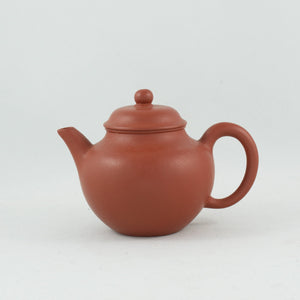
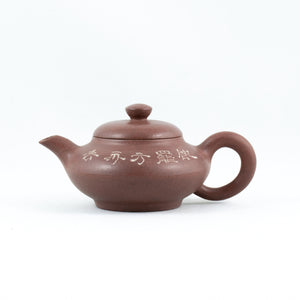
The different shapes of teapots allow for the different types of leaves to expand in their own unique way to maximize the surface area exposed to water while brewing inside the teapot. Teapots come in 2 basic profiles: high profile and low profile and each is suited to a number of teas.
Chart: Teapot Shapes For Type of Tea
|
Taiwan Oolong (High Profile)
|
 |
|
Green/White Tea (High Profile)
|
 |
|
Tie Guan Yin (Gun Yam, Iron Buddha,
Chinese Oolong, Buddha of Mercy) (Low Profile) |
 |
|
Chinese Black Tea (known as Red Tea in China)
Pu-Erh (Bow Lay) (High Profile) |
 |
|
Da Hong Pao (Cliff Tea) & Phoenix Tea (Low Profile)
|
 |
|
A Decorative Teapot (Low Profile)
|
 |
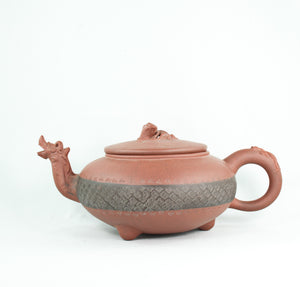
Collecting interesting looking teapots can be an enjoyable and rewarding hobby but one should not confuse a good tea-making teapot with a decorative one. Notice that all the shapes above except for the decorative one follow very simple designs. The reason for the lack of ornamentation is because tea is very sensitive to heat fluctuations and the best teapots distribute heat evenly. Decorations create different densities in the teapot, which can create hot and cool spots. Another reason is that with Gong Fu Cha, hot water is poured over a teapot during brewing and the water will be deflected by awkward angles, creating further hot and cool spots inside the teapot during brewing.
Manufacture
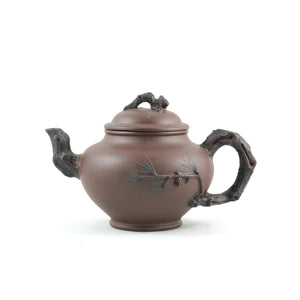
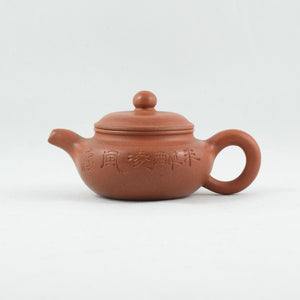
Unlike Western pottery-making techniques where “earth-clays” are turned on a wheel, the more rigid quality of Zisha clay enables the component parts of a teapot to be made in advance and then assembled piece by piece. There are 3 types of manufacture:
- Handmade
- Half-handmade
- Molded
Handmade teapots are formed into shape by an artist who hand cuts the pieces and assembles them into shape using traditional tools such as wooden picks and paddles. In preparing Zisha clay to make the various parts of a handmade teapot, it is folded many times, somewhat like in the manufacture of Japanese katana (samurai sword). This folding strengthens the clay and creates micro channel air pockets in the clay which allows air to move in both directions through the teapot. This “dual-porosity” characteristic is thought to provide additional oxygen to the tea while brewing and as wine drinkers know, oxygen intensifies flavour.
Half-handmade is assembling machine-molded pieces by hand with traditional tools. Many good teapots using Zisha clay are made in this way.
Molded teapots are made by a mass-production process of assembling pre-molded pieces by machine, such as the two halves of the teapot and lid and attaching a pre-molded spout and handle. Even though molded teapots are not as valuable as handmade or half-handmade teapots, many are made with Yixing clay and are still superior for tea-making than glazed or porcelain teapots.
There is a certain pride in owning a handmade teapot, especially if it is made by a famous artist. The making of teapots is a highly skilled art and some Zisha teapots from famous artists are collectors’ items and fetch very high prices, especially if from the 1980’s or 1950’s or even from the Qing Dynasty (1644 –1912). Antique teapots are prized because no two are alike, with each one having a unique history, patina, “taste” and “personality”. Knowing antiques requires highly specialized knowledge so only deal with an expert you can trust.
Clay
Quality of Clay
Yixing (Yee-zhing) clay is the famous clay from the Yixing region of Jiangsu Province in Central China from which the finest teapots have been made for centuries. There are many types of Yixing clay but they can generally be grouped into two grades of quality:
- “Earth-clay” made from mud
- “Stone-clay” made from rock (Zisha)
“Earth-clay” is typically used to make mid-grade quality teapots which are widely available in many designs at affordable prices. It’s natural colour is white. The superior “stone-clay” is known as Zisha or “Purple Clay” (even though the colour of the clay may not necessarily be purple) and comes naturally in a variety of colours. So Zisha Clay is also known as “Natural” or “Original” Clay.
The unique granular structure and mineral composition of Zisha clay gives it excellent heat handling properties that are unsurpassed for maintaining a stable temperature in a teapot, thereby mitigating temperature fluctuations which can diminish the flavour of tea. The mineral and metal content of Zisha includes iron oxide, kaolinite, quartz and mica, making these teapots very strong when fired and resistant to damage when compared to more delicate Western pottery. High quality Yixing clay is 3-6 times less absorbent than other clays which helps these teapots to retain the fragrance of teas.
Chart: Quality of Yixing Clay
| Yixing “Earth” Clay (this example is artificially coloured to look like Zisha “Wuni” Black Clay) |
 |
 |
| Yixing “Stone” Clay (also called Zisha “Purple” Clay, “Natural” or “Original” Clay) . |
 |
 |
Composition of Clay
There are 3 basic compositions of clays which are often mixed together in an infinite variety of combinations.
- Zisha Clay. (Also called “Qing Shui Ni” when not mixed or coloured).
- Mixed (Pingni). Can be any combination of Yixing, non-Yixing and artificial clays
- Artificial (Coloured clay). May also be used in mixed clay.
Chart: Composition of Clay
| Yixing Zisha “Purple” Clay. This example has no mixed clay so it could also be called Qing Shui Ni |
 |
 |
| Mixed Clay (Pingni) |
 |
 |
| Artificial (Coloured) Clay |
 |
 |
DanielRecommends
Colour of Clay
When clays are mixed, they are called Pingni. “Natural” or “Original” Zisha clays are often mixed together to make traditional and new colours. Natural and artificial colours can be mixed or overlayed with each other in various designs. Quite often a small quantity of Yixing earth-clay or even Zisha is added to a lower grade non-Yixing clay and the teapot is then sold as a “Yixing Teapot”. While technically correct, this can be mis-leading.
“Artificial” clay (Yixing “earth” clay and/or non-Yixing clay) is clay that is coloured with artificial dyes, often duplicating natural Zisha colours. These teapots do not perform as well as Zisha teapots and will not look as nice over time as the colour will fade compared to teapots made from Zisha clays which retain their natural colour.
Assessing the quality of a teapot by the colour of the clay is a highly specialized skill and the source of much debate among experts. Here’s a few guidelines to help you understand Chinese teapots by their colours.
The natural colour of Yixing “earth clay” is white. Zisha clay comes in a variety of natural colours, of which the most prized are:
- Red (Hongni)
- Purple (Zhini)
- Green (Luni) – usually mixed with other clays or overlayed
Chart: Colours of Zisha Clay
| Hongni (Red) |

|
 |
| (Purple) not to be confused with Zisha (“Purple Clay”) which describes the entire class of natural colour, high-mineral Yixing clays made from stone |

|
 |
| Duani (Yellow) |
 |
 |
| Heini or Wuni (Black) |
 |
 |
| Luni (Green) |  |
 |
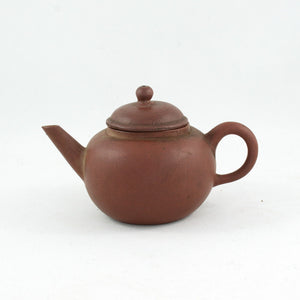
There is an another type of Zisha red clay called Zhuni which is extracted from a rare type of rock vein. The teapots made from this clay are made oversized and fired at a special low temperature (about 1,080F / 582C) and for a much longer time than other teapots. Zhuni teapots shrink during firing, making the clay extremely hard and dense. If you look closely, you can see fine “wrinkles” in the clay from the shrinkage. Even though the firing is performed with the highest degree of precision, the process is so sensitive that over half an entire batch of teapots will crack leaving just a few good ones. Zhuni teapots usually have a distinct red or orange colour and produce a high pitched sound when tapped. Needless to say, Zhuni teapots are very rare and very expensive. The markets abound with teapots claiming to be “real Zhuni”, both new and antique, so don’t even consider buying one of these unless you have access to a trusted expert who can verify the clay for you.
| Zhuni |
 |
 |
Different types of clays are fired at low or high temperatures to make certain types of teapots. Teapots made from more porous clay are low-fired and are made thicker to hold heat longer which is good for Chinese Black Teas (called Red Teas in China) and Pu-Erh Teas. High-fired teapots for teas such as Green, White and Oolongs use a finer, thinner clay and will cool faster, preventing these more delicate teas from “cooking” in the teapot. High-fired Zisha clays tend to have more of a reddish colour while low-fired Zisha clays tend to have more of a brown colour. High-fired teapots are less porous and retain aroma compared to low-fired teapots which are more porous and used for less aromatic teas.
Chart: Firing Type
| High-Fired Zisha Clay |
 |
 |
| Low-Fired Zisha Clay |
 |
 |
New high quality, high-fired teapots have a clear and distinct ring like a little bell when you lift up the lid about a quarter of an inch and allow it to drop gently on to the teapot (make sure you are holding the teapot on the flat of your hand so it is not damping the teapot in any way). In most cases, the higher the pitch and the longer the ring, the finer the quality.
Teapots used for Black and Pu-Erh Tea are thicker and made from a more porous clay than other teapots and don’t have the distinctive bright ringing sound – but this has nothing to do with the quality. These types of teapots are selected by an examination of the clay which usually has a rougher texture than teapots used for other teas.
Older teapots have a distinctive patina from the infusion of tea oils and constant use which can dull the pitch. Many new teapots have a similar shine from a wax coating that is applied to protect the clay and make them look nice on the shelf. (see how to remove this coating below).
Antique teapots have a history (verifiable or not) and have been infused with tea oils over many years. They can produce a decided “thunk” rather than a clear ring because of the accumulation of oils in the clay but can still be of the finest quality. But remember, you are in the antique game now so buyer beware!
Shopping Checklist
Chart - Selecting A Chinese Teapot By Profile And Method Of Firing
| HIGH PROFILE | High Fired Clay | Low Fired Clay |
 |
Most Green/White Teas any tea made from "tips" Taiwan Oolong |
Pu-erh |
| LOW PROFILE | ||
 |
Tie Guan Yin (also called Chinese Oolong, Iron Buddha, Buddha of Mercy Da Hong Pao Phoenix Tea |
Lapsang Souchong and other Chinese Black Teas (known as Red teas in China) |
Here is a checklist of points to keep in mind when you are shopping for a teapot:
- What kind of tea will I be making?
- What size of teapot do I need for the number of people I will be serving most often?
- Will the shape allow the proper expansion for the tea leaves I will be using?
- What is the method of manufacture? - Handmade, Half-Hand made or Molded
- What is the quality of the clay? – Yixing Zisha, Yixing “Earth Clay” or a Non- Yixing clay
- What is the composition of the clay? – “Natural/Original” Zisha (non coloured, non-mixed), Mixed or Artificial
- What is the right type of firing for the teapot needed? – Low-Fired or High-Fired
- Is the colour of teapot consistent with the seller’s description?
- Are there any chips, cracks or hidden hairline fractures?
- Is the top hole the correct size for the type of leaves being used and is the size appropriate for the fragrance of the tea?
- Does the lid fit securely in the top hole but is easy to remove?
- Is the spout hole large enough to allow the tea to pour freely?
- Does it have a strainer installed? Is the teapot properly balanced and comfortable to handle?
- Does the teapot make me feel good when I handle it?
How To Season A New Teapot
New teapots come with a wax coating to protect the clay and make them look shiny on the shelf (and also make them look like more expensive antique teapots). This coating must be removed before making tea. Here’s how to remove the coating and season the clay:
- Rinse the teapot in hot water and brush vigorously inside and outside with toothpaste (which is gently abrasive) and a toothbrush. Yes you read this right!
- Put a large pot of water on the stove lined inside with a cloth. The pot should be large enough to completely submerge the teapot
- Wrap the lid in another cloth and place in the large pot with the teapot. The cloths prevent breakage by stopping the teapot and lid from hitting the sides of the pot and each other when the water is boiling
- Bring the water to a boil, cover and boil the teapot and lid for 30 minutes
- After 30 minutes, turn off the heat and allow the water to cool
- Remove the teapot and lid and rinse thoroughly in warm water
- Optional - If you really want to season your teapot like a pro, re-fill the large pot with water, bring to a boil and add 2 – 3 tea-scoops of the tea leaves that you will be using for that teapot. Turn off the heat, cover the pot and steep the leaves for about 30 minutes to make a strong tea. Strain out the leaves and any small particles. Repeat Steps 2 to 6 using this strong tea instead of water. (Straining removes small leaf particles from the water that can clog the pores of the clay and reduce the teapot’s effectiveness).Your teapot is now ready to start making tea
Always pour any extra tea you might have over your teapot and give it an occasional polish with a soft cloth. This will help to build up the oils allowing your teapot to contribute its own “taste” to the tea and create its own unique patina.
If you should ever decide that you wish to use a teapot for making another type of tea, simply re-season the teapot per the above steps. There may be a break-in period with older pots.
Glass And Porcelain Teapots

Glass and porcelain teapots are “flavour neutral “ and unlike clay teapots, do not change the taste of tea in any way as their impermeable surfaces do not absorb any tea oils and can be rinsed clean after each use. These are good for testing and comparing teas. You might want try a new tea in a glass or porcelain teapot before you make it in your clay teapot to compare how your clay teapot is affecting the taste.
If you want to save money or are a traditionalist, you can use a gai wan which is an inexpensive porcelain cup with a lid and base that comes in many sizes and can be used for all teas. Glass teapots are often used for Green, White and “blooming” teas as they do not absorb the delicate tea fragrance like some clay teapots and you can see the leaves expanding in a pretty display. But a high quality, high-fired Zisha clay teapot is still superior to glass and porcelain and like all clay teapots, improves the taste of tea.
More Information
 Top of Page
Ask The Tea Wizard
Don't know which tea is right for you? Answer a few questions and the Online Wizard will show you all the Chinese teas that suit your taste.

